Early in a color consultation at a salon in Gastonia, the questions can feel like an interrogation. What have you colored with, how many times, how long ago, did anything ever go darker, was there ever black? There is a practical reason for every one of them. Hair remembers its chemical history long after the color looks gone, and a stylist who does not know that history is guessing at how your hair will lift.
What is actually inside the hair
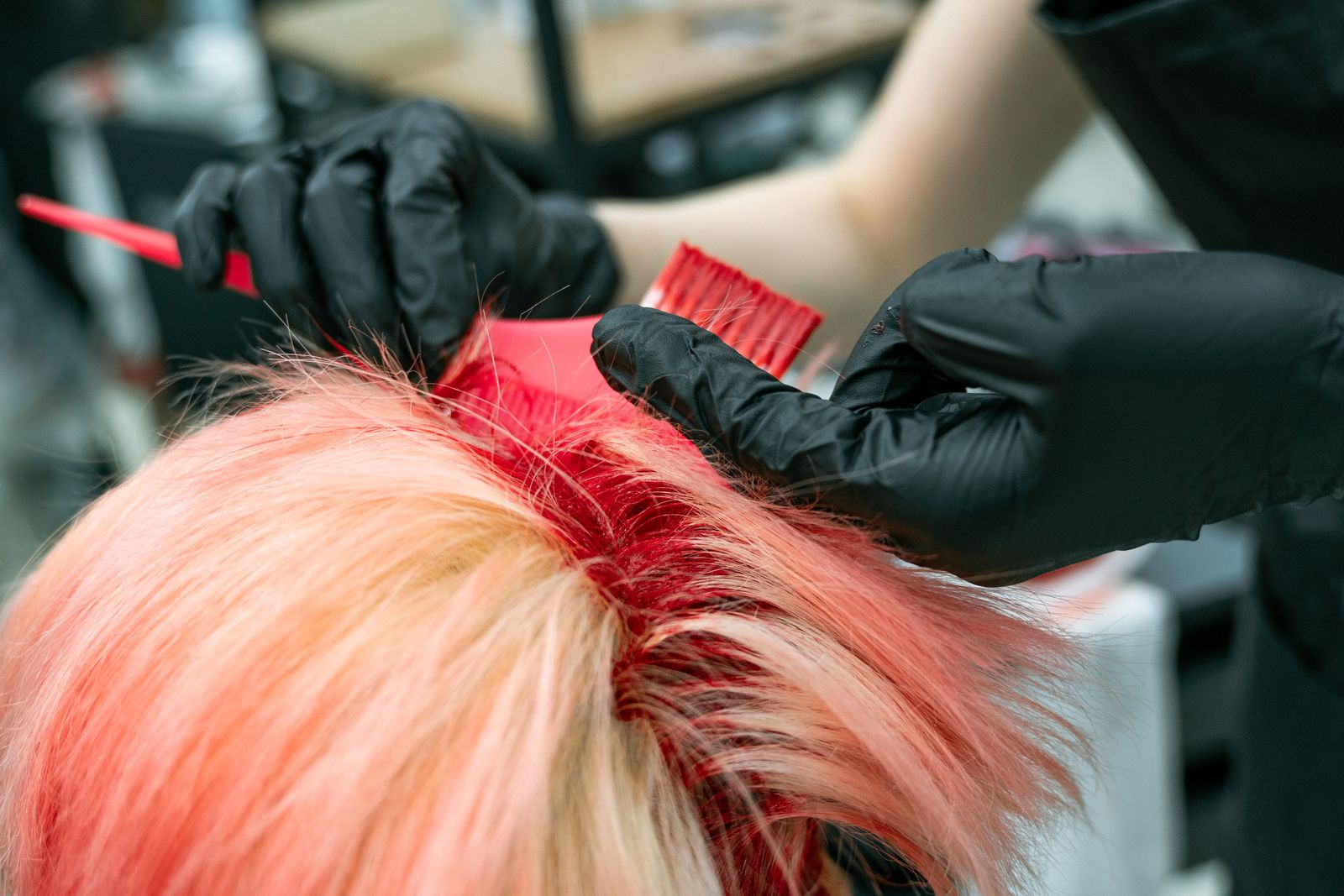
Permanent color, whether from a box or a salon tube, works by opening the cuticle and depositing pigment inside the strand while lightening the natural pigment underneath. The visible color fades from the surface over time, but much of the deposited pigment stays in the hair until that hair grows out and is cut off. Shoulder-length hair can easily carry two or more years of color history in its ends.
Some older and specialty box products have used metallic salts and compound dyes that react unpredictably with professional lightener and color. Modern mainstream box dyes are mostly standard oxidative color, but a stylist cannot tell by looking which products were used, and the reaction risk is exactly why the history questions matter. Honest answers protect your hair, not the stylist's feelings.
How history shows up over time
Think of your hair as a timeline, newest at the scalp and oldest at the ends. Each zone can behave differently in the same appointment.
| Zone / timing | What is usually in the hair | How it tends to behave |
|---|---|---|
| Roots, last 1-2 months | Natural pigment only, warmed by scalp heat | Lifts fastest and brightest; often processed last for that reason |
| Mid-lengths, 6-12 months of history | One or more color applications, partly faded | Lifts unevenly and often pulls warm, orange, or gold |
| Ends, 1-3 years of history | Layered color, most porous and fragile | Grab color darker, lift patchy, and break first if pushed |
| Old dark or black dye, any age | Heavy pigment load, sometimes metallic compounds | Lifts slowly through red and orange stages; may need sessions spread over months |
| Recent color, under 2 weeks | Fresh pigment, cuticle still settling | New services usually wait; strand tests read more honestly after this window |
Why lifts go unpredictable
Lightener removes natural pigment and artificial pigment at different rates, and artificial pigment is the stubborn kind. Hair that was colored dark, then light, then dark again carries bands of different pigment at different depths, so it lifts in bands too. That is the chemistry behind the classic correction problem: bright roots, orange middle, muddy ends, all from one application that behaved exactly as the history said it would.
Porosity adds a second variable. Ends that have been colored repeatedly absorb new color faster and hold it darker, so a formula that looks perfect on the mid-lengths can turn the last two inches nearly black. Strand tests, where a small hidden section is processed first, exist to reveal both problems before they happen to a whole head.
Planning a correction across the year
Big changes after box dye are usually staged. A first session might remove buildup, even out bands, and land at a warm intermediate shade. Later sessions, spaced weeks apart to let the hair recover and be assessed honestly, lift further toward the goal. Haircuts along the way remove the oldest, most layered ends, which quietly does as much for the final result as the color work itself.
At home between sessions, the job is gentle handling: fewer hot passes, regular conditioning, and no new box color to bridge the gap, because every new layer restarts the prediction problem. If cost or patience runs out mid-plan, say so. A stylist at Hair Factory on Broad would rather design a good stopping point than watch a half-finished correction get covered with black box dye in a frustrated evening.
What to disclose, every time
Mention box color even if it was a year ago, semi-permanent and glosses included, plus henna and anything labeled natural or herbal, which can contain the metallic compounds that cause the worst reactions. Mention lightening kits, color removers, and perms or relaxers too, since they change how hair tolerates new chemistry. If you genuinely cannot remember a product name, the color, the year, and how many applications still give a stylist most of what they need.
Common questions
Will one box dye application ruin a salon color plan?
Rarely ruin, but it will change the plan. A single application is a known layer a stylist can test and work with; undisclosed layers are the real problem.
Why does going from dark box dye to blonde take months?
Artificial dark pigment lifts slowly and unevenly, and pushing it all at once breaks hair. Staged sessions trade speed for hair that is still attached and even in tone.
Does color remover erase my history?
Removers shrink artificial pigment so it can rinse out, which helps, but treated hair still behaves differently from never-colored hair. Tell your stylist you used one.
Photos in this guide are representative stock images.
← All guides from Hair Factory on Broad← Back to Hair Factory on Broad